


A year ago Rafa Jódar was ranked 895th in the world and playing college tennis for the University of Virginia. Last Sunday, he lifted his first ATP title in Marrakech. The numbers in between tells a story that sport has not seen before.
Jódar won the Grand Prix Hassan II by beating Marco Trungelliti 6-3, 6-2 in a final that was hardly contested. He fired 16 winners to Trungelliti’s three, won 86 per cent of points behind his first serve, and broke the Argentine four times. It was comprehensive, it was clinical, and it came just 17 matches into his professional career.
That figure, 17 matches from debut to ATP title, is something worth deeper reflection. Current world number 1 and phenomena, Carlos Alcaraz needed 10 more matches than Jódar to achieve this exact same feet in Umag 2021, some 17 months after his debut in Rio. Sinner, the current world number two, required around 47 matches across more than a year between his debut at the 2019 Budapest Open and his first trophy in Sofia in November 2020. In the context of the modern game, what Jódar has done is not merely fast... it is historically anomalous.
Highlights of Grand Prix Hassan II final : ATP Tour Youtube
Most young players that arrive on the ATP Tour spend months if not years getting used to the environment and learning how to compete with the best. They lose ugly early-round matches. They blow leads. They figure out, slowly, how to close out sets against experienced opponents who know every trick in the book. Jódar appears to have skipped that phase almost entirely.
The explanation lies in his development pathway, while not totally unique, it is still unusual at the top end of men’s tennis. Jódar spent 2024 and early 2025 at the University of Virginia, playing NCAA Division I tennis. He reached number two in the ITA collegiate rankings, posting a 19-3 singles record. He won three Challenger titles in rapid succession in the back half of 2025, in Crete, Lincoln, and Charlottesville, becoming only the third Spanish teenager to achieve that after Alcaraz and Nicolás Almagro. He qualified for the Next Gen ATP Finals in Jeddah, where he saved four match points to beat top seed and eventual champion Learner Tien.
By the time he announced his switch to professional tennis on the last day of the year in 2025. Jódar had accumulated something that most debutants lack: hundreds of competitive matches against high-quality opposition, playing in a team environment with genuine pressure and consequence. He was no longer a raw talent... he was genuinely ready for big stage.
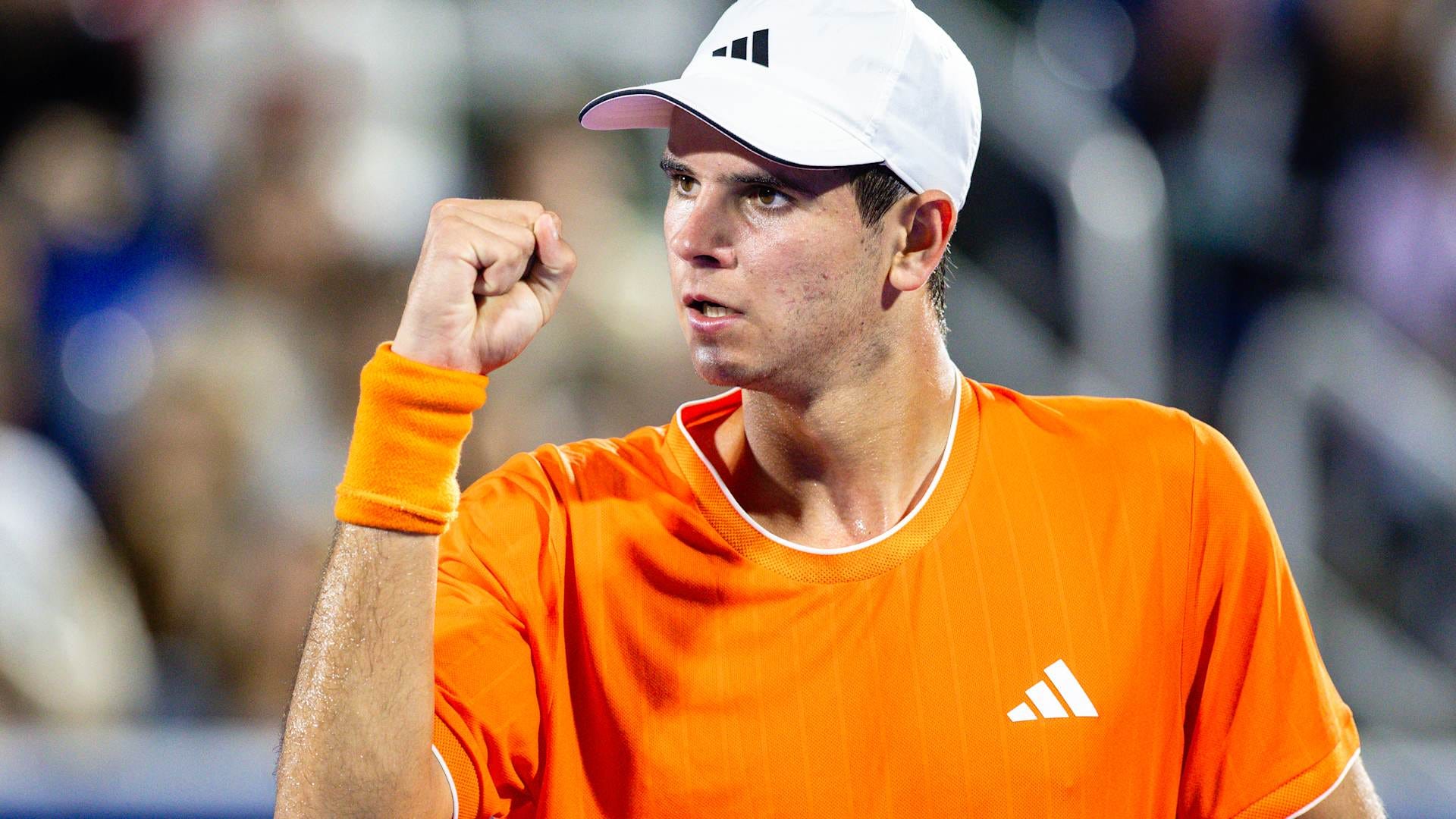
Watch Jódar play and one shot stands out above everything else… the forehand. It is not subtle. It is heavy, flat when it needs to be, and directed with an aggression that belies his age. In Marrakech, it was the weapon that he utilised the most on his way to victory.
The Spaniard’s game is built around controlling rallies from the baseline, dictating with the forehand and using a first serve that is improving tournament by tournament. There are shades of the player he grew up idolising - Rafael Nadal, in the physicality and intensity, though Jódar’s game is more direct, more willing to take the ball early and end points on his terms. When asked whether he draws more from Nadal or from Alcaraz, with whom he has trained, Jódar diplomatically refused to choose, saying he takes what he can from both.
It is a smart answer from a 19-year-old navigating the inevitable comparisons that come with being a Spanish teenager named Rafa who is very good at tennis. For the record, he was not named after Nadal… his father, grandfather, and great-grandfather are all called Rafael.
Jódar began 2026 ranked 168th. He is now 57th. The Australian Open saw him qualify and win a main-draw match on debut. Indian Wells gave him his first Masters 1000 main draw. Miami produced his first Masters-level wins. Marrakech delivered the title. Each tournament has represented a step up, and each time he has looked like he belonged.
The clay season is now in full swing, and with the French Open less than two months away, the question is how far Jódar can push in his first full year as a professional. A top-50 ranking looks inevitable. Roland-Garros will be the first real examination against the elite on a sustained, best-of-five-sets stage.
There are reasons for caution. A sample size of 17 matches is vanishingly small. The ATP Tour is littered with players who burst onto the scene and then plateaued once opponents had tape to study and bodies started to feel the cumulative toll of a full calendar. Jódar has never played a full professional season. He has never dealt with a mid-season slump, or an injury layoff, or the mental grind of losing three first-round matches in a row.
But those are tomorrow’s problems. Today, the data point is simple and extraordinary: 17 matches, one title, and a ranking that has climbed more than 800 places in twelve months. Whatever comes next for Rafa Jódar, he has already produced the fastest start to a professional career that men’s tennis has seen in a very long time. The rest of the tour has been put on notice.