


On Sunday afternoon at Canterbury, with Kent following on 506 runs behind Northamptonshire and the match slipping away, Ben Compton did what Ben Compton does. He batted. Through the morning before rain arrived, through the afternoon when play resumed, and all the way to an unbeaten 114 that steered Kent to a draw nobody thought was possible two days earlier.
It was not the first time he has done this, in many ways, it is the only thing he has ever done and it is the reason he remains one of the most quietly remarkable cricketers in the English domestic game.
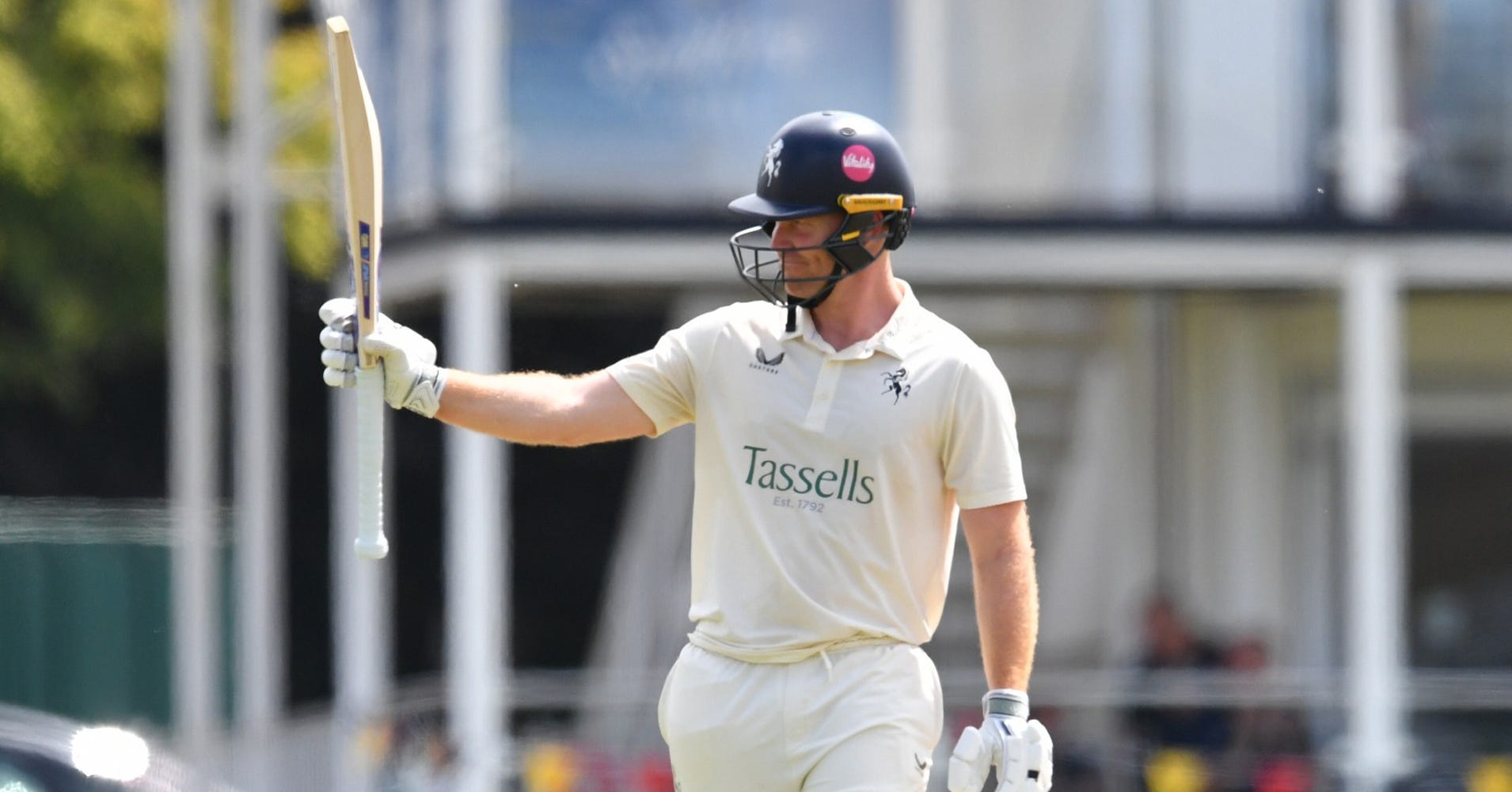
Compton was born in Durban, South Africa, in 1994. He attended Clifton School, represented KwaZulu-Natal at under-15 level, and grew up in the considerable shadow of a famous surname. His grandfather was Denis Compton, one of the most celebrated and entertaining batsmen in England’s history, his cousin is Nick Compton, who won 16 Test caps, and his father Patrick played three first-class matches for Natal.
The name opened doors. It did not keep them open.
He moved to England as a teenager and began the long grind of club cricket, spending three seasons at Wimbledon CC in the Surrey Championship from 2013 to 2015, scoring 1,193 runs at 54.22 across 33 matches. It was his cousin, Nick who suggested he move to Richmond CC in the Middlesex League, where across four seasons he scored 3,191 runs in 69 league and cup matches at 46.25. The runs were relentless, however the interest from counties was not.
He trialled unsuccessfully at Hampshire, MCC Young Cricketers, Durham, and Kent, who turned him down despite four second XI hundreds in 2019. He took part-time jobs to fund cricket trips to Australia, completed an Open University degree in Politics and History, and kept scoring runs that nobody in a position of power seemed to care about.
Nottinghamshire finally offered a professional contract in October 2019, but the fit was never right. They signed Haseeb Hameed and decided a Compton-Hameed combination at the top of the order was too slow, preferring Ben Slater as the opening partner. Five first-class matches over two seasons yielded just 98 runs at 12.25, and Compton has since described the experience with characteristic understatement: “The thing I struggled with was it felt like I was batting for my life.”
Notts released him at the end of 2021. He was 27, with no county willing to take him on and a first-class career that appeared to be over before it had properly begun.
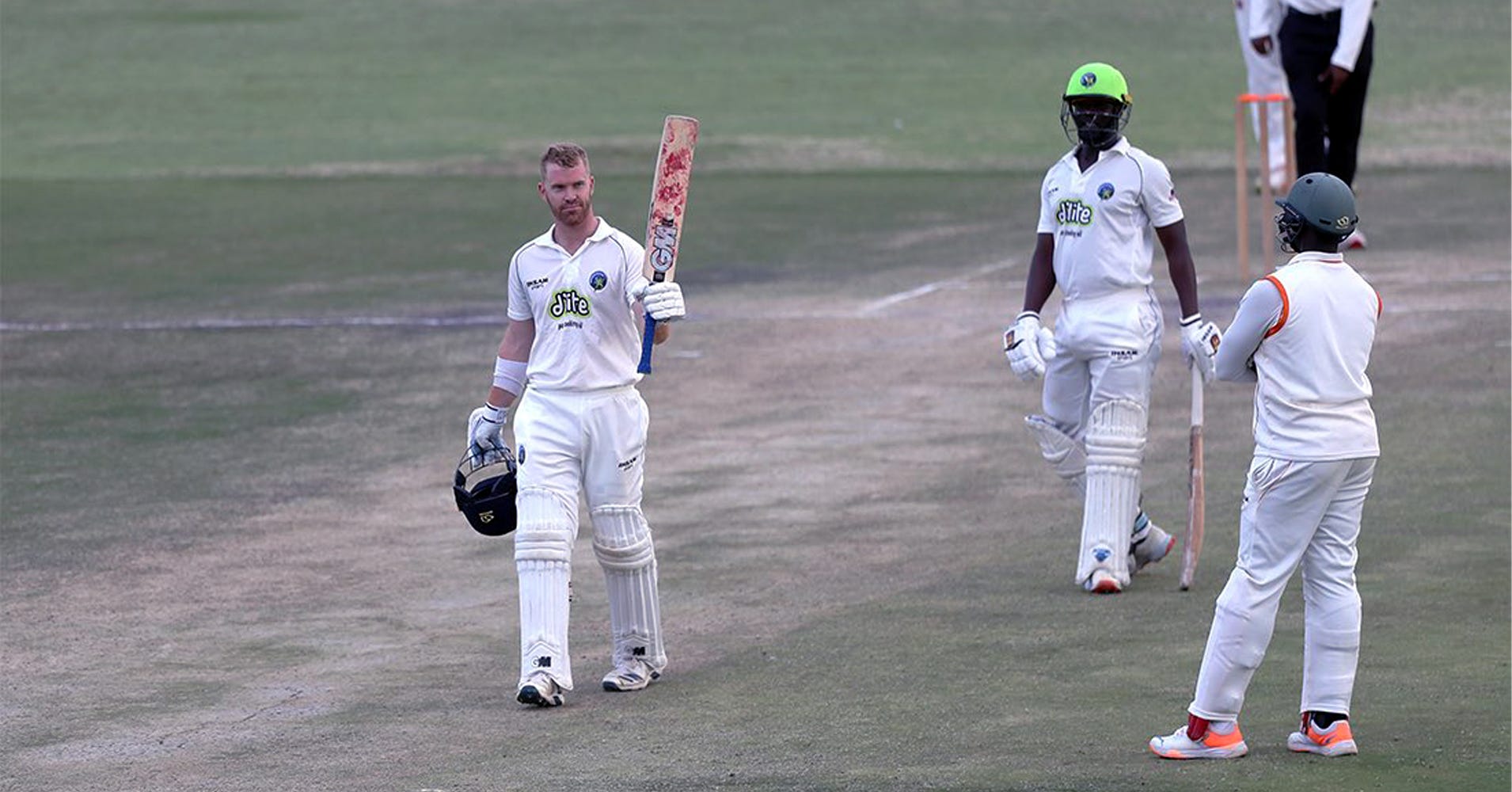
What happened next changed everything. Kent offered a two-year deal in October 2021 as they wanted a left-hander to balance a squad full of right-handed batters and before the English season started, Compton flew to Zimbabwe. Dave Houghton, the former Zimbabwe captain, had arranged a stint with the Mountaineers in the Logan Cup. Compton made two first-class hundreds, scored 479 red-ball runs, and was named Batter of the Tournament in the Pro50 Championship with 361 runs in eight matches.
He returned to England and proceeded to score centuries in each of his first three innings for Kent: 129 against Essex at Chelmsford on debut, then 104 not out and 115 in the same match against Lancashire at Canterbury. The 104 not out saw him carry his bat through the first innings. The 115 in the follow-on came after 856 minutes at the crease across the match… a County Championship record. He was the last man out, lbw to George Balderson, falling just short of becoming only the seventh batsman in history to carry his bat in both innings of a first-class match.
His former coach Matt Walker put it simply: “I’ve never seen anything like it. It’s remarkable. A mind-blowing game for him at the crease.”
By the end of that 2022 season, Compton had scored 1,193 Championship runs at 54.22. He swept Kent’s end-of-season awards: Batter of the Year, Players’ Player of the Year, and Player of the Year and he was the most selected player in BBC Sport’s County Championship Team of the Year. He was 28.
The years since have only reinforced what that first season suggested. There have been quieter patches, 735 runs at 30.62 in 2023, 753 at 37.65 in 2024, but even in those leaner campaigns, he remained Kent’s most reliable top-order batsman and continued to spend his winters playing competitive cricket overseas, first returning to Zimbabwe (where he scored 217 and 154 in the Logan Cup) and then playing for KwaZulu-Natal Inland in South Africa’s domestic first-class competition.
Then came 2025: 1,386 Championship runs at 60.26, the second-highest tally in all of county cricket behind only Saif Zaib. Five centuries. A new three-year contract securing him at Kent until 2028. His county cap, number 223, awarded during Canterbury Cricket Week. At 31, he was playing the best cricket of his life.
What makes Compton unusual in the current landscape is not just his late arrival at the professional level, it is the way he bats. Walker once called him “a bit of an old-fashioned English opener,” and while that undersells the craft involved, it captures something true. He waits for the ball to come to him, defends immaculately, works it square on either side of the wicket and punishes anything loose.
In an era defined by Bazball and its philosophy of aggressive intent, Compton has been quietly making the case for something different. Asked whether England’s approach under Brendon McCullum might filter down into county cricket, he was characteristically thoughtful: “I don’t necessarily think me changing my game is going to do me much good. People may get slightly misguided in this Bazball type era, where they just think it’s fifth gear from the get-go. It’s not that. They do bide their time at times and they do earn the right. I interpret that as having the freedom to be positive, in whichever way that player sees fit.”
Neil Burns, who has coached Compton in cricket and in life, once summed up his career like this: “He has done it the hard way as a self-funding, resourceful young adult. This is no silver spoon story. His story offers hope and inspiration to every young cricketer not afforded an opportunity on the way up through the county player pathway system.”
Compton now 32, is still earning every run through patience, technique, and a stubbornness that the modern game seems determined to breed out. In an age of increasing impatience, Ben Compton is proof that there is still a place, and still a beauty, in simply batting.